

Interview with a member of the SAR 🚁🛟
This time, we are interviewing a colleague from SAR who has given us a very detailed and interesting interview. As always, it was made possible by the staff of our Discord channel. If you want to take part in future interviews, join our channel by clicking here.
We hope you like it:
1.- Before entering the SAR, were you in any other unit? If so, could you tell us which one?
No, this is my first posting. It was also my first choice when I applied to the Armed Forces. Although I had some interest in other units, I always knew that my path was directed and oriented towards the world of rescue. I found out which units performed search and rescue duties within the Armed Forces, and I made the right choice with this unit. These units are among the most rewarding when it comes to learning and performing these tasks.
2.- For those who do not know, could you explain to us what SAR is and what it is dedicated to?
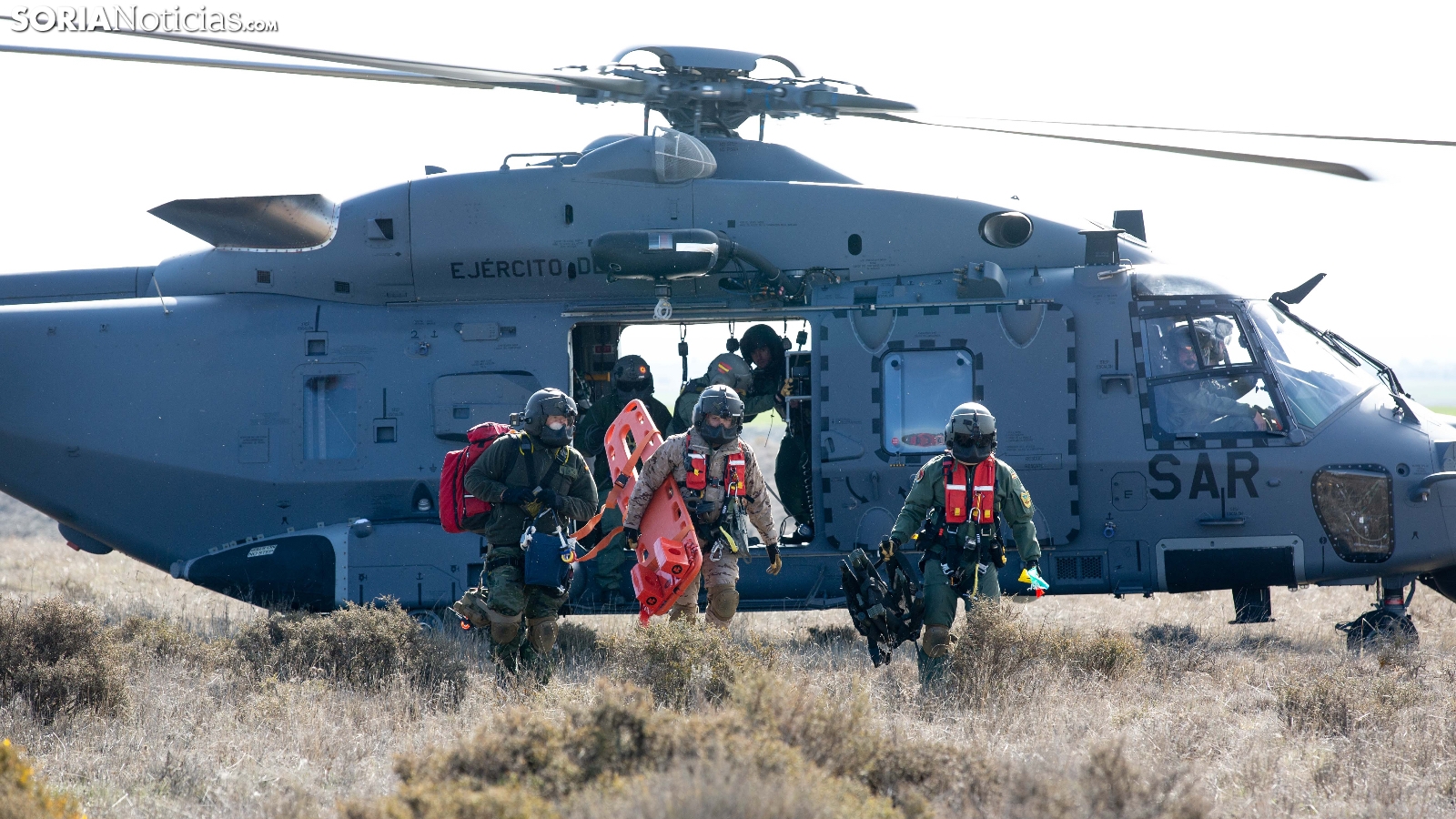
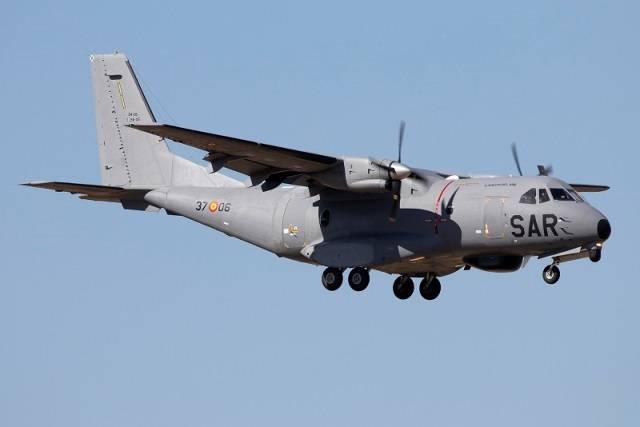
The SAR (Search and Rescue) units carry out air search and rescue. In the case of Wing 49, the main role is to conduct search and rescue missions and maritime surveillance (VIGMA) with two aircraft: the HD-21 Super Puma helicopter and the D-4 CASA CN235 plane, which are on permanent standby 24 hours a day.
On the other hand, the SAR is responsible for acting in the event of any air, land, or maritime accident. Its mission is defined as follows: "Its mission is to locate crashed aircraft and try to provide assistance or rescue to any possible survivors as quickly as possible."
We also focus on conducting practices, exercises, and training for these activities (simulated searches at sea, raft launching, survival practices at sea, handling of radio beacons and equipment...) to be totally prepared for when any type of accident happens.
3.- How is it organized and in which part of Spain is it present?
The SAR units are distributed throughout the Spanish territory with their corresponding areas of responsibility (FIR). There are three squadrons trained to carry out the SAR mission as the main role:
- Squadron 801: is located in Palma de Mallorca, Balearic Islands. It is responsible for FIR BARCELONA.
- Squadron 802: is located in Las Palmas de Gran Canaria, Canary Islands. It is responsible for FIR CANARIAS.
- Squadron 803: located in Getafe, Madrid. It is responsible for FIR MADRID.
4.- Do you prefer daytime or nighttime operations?
I have no preference. Both are rewarding when carrying out SAR duties or VIGMA operations, and are similar in terms of the work involved and operationally. Night operations are more difficult because of the lack of visibility, making them more demanding.
5.- What do you think of squadron 801?
Squadron 801 is a benchmark for me in professionalism and dedication, with highly qualified and trained personnel for SAR and VIGMA operations.
It has been active since 1954, when the 50 Escuadrilla de Salvamento was created as the first SAR unit to operate in Spain. It has carried out a total of 116,300 flight hours, with over 4,000 hours in real operations (rescues, escorts, evacuations, maritime surveillance missions, etc.). In addition, the unit is constantly developing its capabilities by participating in international and national exercises and collaborates with both civilian and military organizations as needed.
It is also worth highlighting its participation in international missions, such as Peacekeeping Operations (OMP): Operation Atalante (combating piracy and illegal trafficking of people), Operation Sophia, Operation ISAF, etc.
Throughout its history, Squadron 801 of the FF.AA. has operated six types of aircraft, three airplanes and three helicopters; among the first we find the SA/HU-16 Grumman (1954-1978), CASA C-127 (1963-1974) and CASA C-212 Aviocar (since 1979); among the helicopters, the AUGUSTA-BELL 205 (1967-1983), AS-332 Super Puma (1983-1994) and SA-33 Grumman.
6.- What is required to become a helicopter flight mechanic/hoist operator?
To become a flight mechanic/hoist operator, you would need to enter through the non-commissioned officer career stream in the Mechanical Maintenance specialty. After completing training, you must check whether the advertised vacancies include a helicopter aircrew position in Wing 49 - Mallorca, Wing 48 - Madrid or Wing 46 - Canary Islands, corresponding to squadrons 801, 803 and 802 respectively.

7.- What requirements are needed to be crew on the CN-235?
A position as a crew member on the CN-235 can be obtained through the Tropa y Marinería, non-commissioned officer or officer career streams, depending on the role. This type of position requires extensive knowledge regarding the operation of the aircraft's mission equipment and systems for the operator role, as well as specific training for the observer role.
To apply for the published vacancies of air crew member, in the case of operator and spotter, an instruction and evaluation plan must be completed in the unit. A failure may result in loss of assignment. The operator will focus on the study and handling of the manual of the different mission systems of the aircraft, while the spotter will emphasize the proper handling of the various cameras and proficiency in procedures such as launching rafts or flares.
8.- What do you need to do to become a rescuer?
You can apply for a rescuer position through the Tropa y Marinería, non-commissioned officer or officer career streams. However, this position requires a high level of psycho-physical preparation, as the requirements of its physical tests show.
To enter directly through the Tropa y Marinería career stream, you must check that the vacancy advertised in the Official State Gazette (BOE) is for one of the SAR squadrons and that the remarks require diver/swimmer qualification.
Once assigned to the position, you must pass a training programme within the unit; failure may result in losing the posting.
9.- What is the worst thing you have seen in a rescue?
In March 2022, we carried out a national maritime surveillance operation with our D-4 VIGMA. Just under an hour before dusk in the Cádiz area, the operator detected a possible small radar contact with a somewhat unusual and variable course. We decided to remain in the area to analyse the situation and carried out a sweep with the FLIR in infrared mode.
After several sweeps, we realized that it was a small vessel no longer than 8 meters with one person on board in a state of desperation (the person was waving a reflective vest and moving both arms vigorously). We then identified the contact as a drifting vessel in a life-threatening situation and began the procedure to get that person to safety.
Although the vessel was floating well and there was a life jacket, it had no radio on board to communicate with anyone. We contacted maritime rescue Almeria, which set out immediately, before visibility deteriorated as night fell, and the rescue was successful. The person adrift turned out to be a fisherman who had strayed from his fishing route when his engine failed. In the end, it was just a scare and he returned home safe and sound.
In addition, when conducting maritime surveillance operations at the national or NATO level, we detect multiple migration contacts occurring in our waters of responsibility, situations that are not always pleasant.

10.- Did you ever feel during a rescue that it was better to leave?
Never. As long as fuel and resources allow, we stay in the area until the last moment. Otherwise, it would be fleeing from our work and our obligation as professionals and military personnel.
11.- How is your preparation?
Daily we carry out training in all types of searches, at sea or on land (different search patterns at different heights and in different conditions, vessel recognition, coastal reconnaissance and searches along the coast...).
Helicopter rescuers also conduct drills constantly so that they are prepared and qualified to respond to any incident.
12.- What is a normal day like at your job?
Our daily work is mainly dedicated to the preparation of the mission on the ground. Depending on the department you are assigned to, you may work in areas as varied as aircraft operations management (flight hours, crew training, exercise coordination...), cartography, flight safety, equipment maintenance or mission support centres.
The work in flight consists of carrying out exercises, missions, and SAR and maritime surveillance drills, always keeping the crews prepared.
13.- What advice or recommendation would you give to someone who wants to enter the SAR?
I would recommend learning as much as possible about SAR and its units: how they work, their mission and their operational capabilities. Similarly, and although the training of the crews is carried out entirely within the unit, it would be advisable, if the opportunity arises, to take a course related to the sector, whether it be maritime safety training, rescue boats (fast and non-fast), survival craft, helicopter rescue swimmer, or diver among others.
We look forward to reading your comments.
New Arrivals


SPECTER MILSPEC Ballistic Glasses - Gatorz
Original price
€382,99
Original price
€382,99
-
Original price
€382,99
Original price
€382,99
Current price
€266,99
€266,99
-
€266,99
Current price
€266,99
The SPECTER MILSPEC ballistic glasses by Gatorz combine protection, low weight and a clean tactical design. Made in the United States, they feature...
View full details
Original price
€382,99
Original price
€382,99
-
Original price
€382,99
Original price
€382,99
Current price
€266,99
€266,99
-
€266,99
Current price
€266,99
Sale


Gear belt Hardrada father belt - Ragnar Raids
Original price
€149,99
-
Original price
€169,99
Original price
€149,99
€149,99
-
€169,99
€149,99
-
€169,99
Current price
€149,99
The Hardrada Father equipment belt from Ragnar Raids is part of the Valhalla System range and combines a rigid structure with a lightweight, low-pr...
View full details
Original price
€149,99
-
Original price
€169,99
Original price
€149,99
€149,99
-
€169,99
€149,99
-
€169,99
Current price
€149,99


Compact rechargeable OCLIP 2 Ultra UV flashlight, 450 lm - Olight
Original price
€79,99
-
Original price
€79,99
Original price
€79,99
€79,99
-
€79,99
Current price
€79,99
The Oclip 2 Ultra from Olight is a compact rechargeable flashlight designed to provide light while keeping your hands free. Its body is made of hig...
View full details
Original price
€79,99
-
Original price
€79,99
Original price
€79,99
€79,99
-
€79,99
Current price
€79,99


EDC ArkPro Lite UV 1200 lm Rechargeable Flashlight - Olight
Original price
€97,99
Original price
€97,99
-
Original price
€97,99
Original price
€97,99
Current price
€89,99
€89,99
-
€89,99
Current price
€89,99
The Olight ArkPro Lite UV EDC flashlight combines white, red, and ultraviolet light in a flat, compact design made to fit comfortably in your pocke...
View full details
Original price
€97,99
Original price
€97,99
-
Original price
€97,99
Original price
€97,99
Current price
€89,99
€89,99
-
€89,99
Current price
€89,99
Sale


FAST Wendy-type Asalto Helmet ballistic helmet Level IIIA
Original price
€479,99
Original price
€479,99
-
Original price
€479,99
Original price
€479,99
Current price
€464,99
€464,99
-
€464,99
Current price
€464,99
The FAST Wendy-type Asalto Helmet ballistic helmet from Ballistic Protection IV combines level IIIA protection with comfort and an adjustable fit f...
View full details
Original price
€479,99
Original price
€479,99
-
Original price
€479,99
Original price
€479,99
Current price
€464,99
€464,99
-
€464,99
Current price
€464,99
Sale
Comments
Leave a comment